
Living at home · 10 min read
Perth's Ageing In Place, Accessibility Experts - Servicing all of Perth
Living at home
10 July 2026 · 10 min read
AI overview
Falls at home are the leading cause of injury hospitalisation for Australians over 65, and most of them are preventable with straightforward changes. This checklist covers every room in the house - bathroom, bedroom, kitchen, living areas, stairs and outdoors - and is designed to be walked around the home rather than read at a desk. Print it, carry it from room to room, and tick each item as you check it.
Key highlights
Summarise with AI
Ask an AI assistant to summarise this article and tell you how AccessAble can help with your home.
Walk through the home room by room with this list. Do not try to do it from memory. The purpose of a physical walk-through is to notice things you have stopped seeing - the mat that has always been there, the step you have climbed a thousand times, the light that is slightly too dim.
Mark each item as Clear (no action needed), Action needed (you can address it yourself), or Get help (needs a trades person or professional assessment). At the end, the 'Action needed' and 'Get help' items become your priority list.
Do not do the walk-through alone if possible. A second person notices different things. If family members are helping to plan modifications, do the walk-through with them - it produces better shared understanding than a description over the phone.
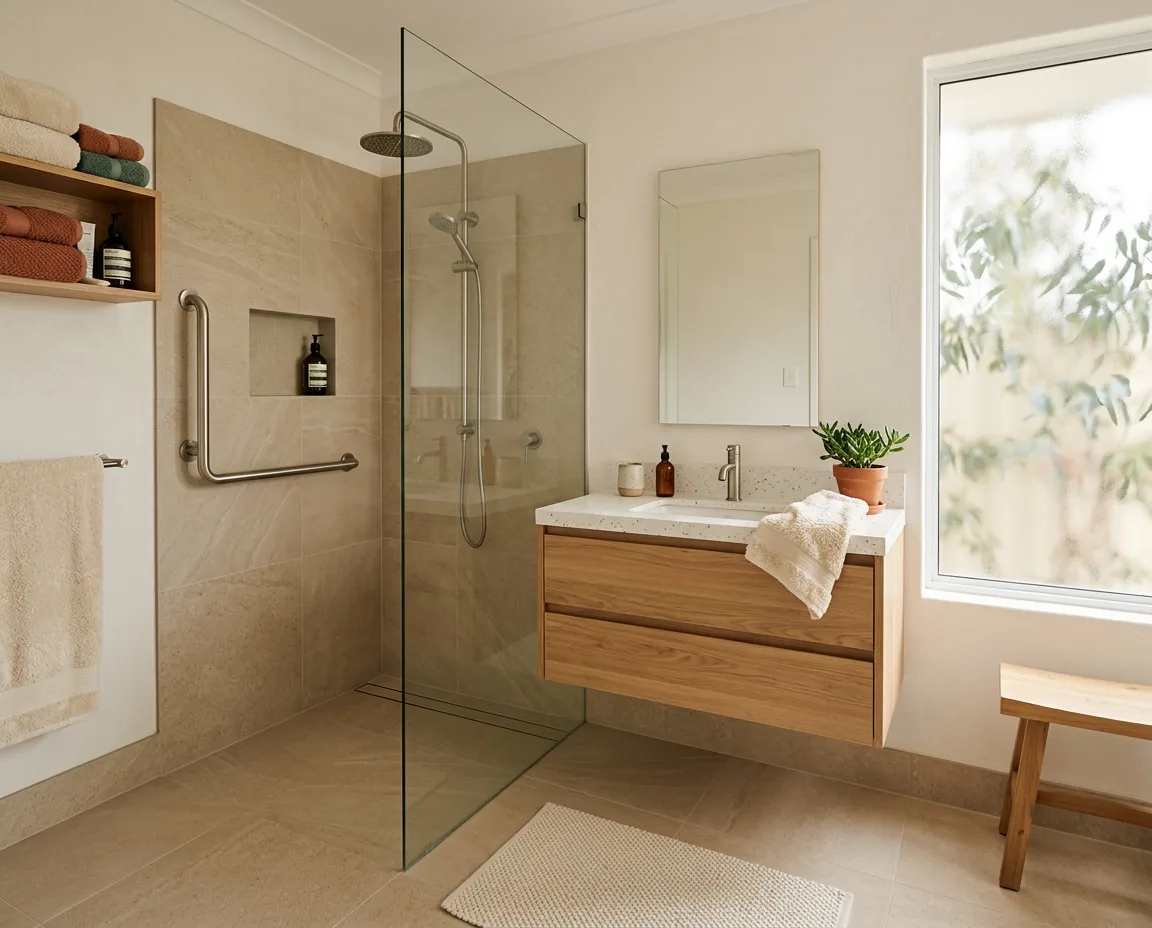
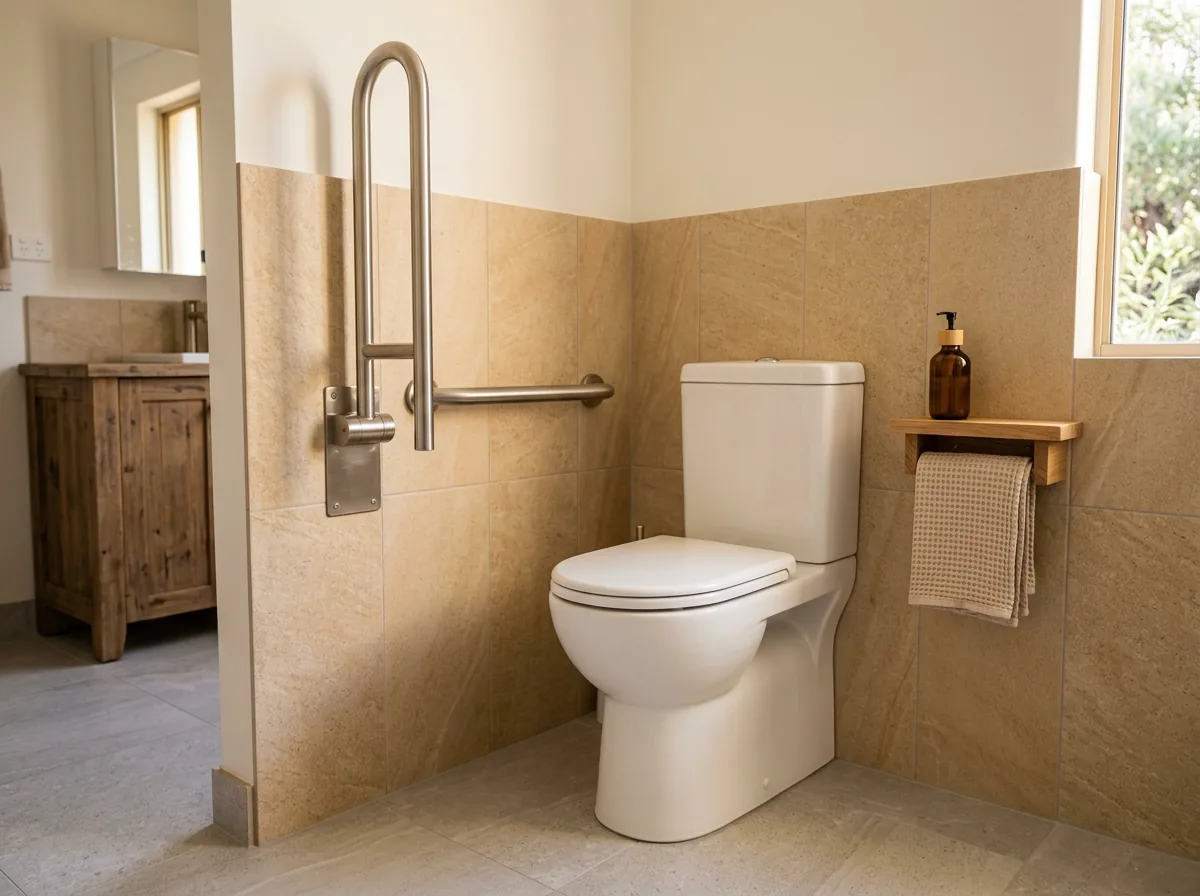
The bathroom is the highest-risk room in the house. Check every transition point - getting in and out of the shower, sitting down on and standing up from the toilet, stepping in and out of the bath.
Bedrooms are a fall risk at night and on waking - reduced alertness, low light, and the transition from lying to sitting to standing all contribute. Check the path from the bed to the door and to the bathroom.
The kitchen combines wet floors, hot surfaces, and frequent reaching and bending. Fatigue is also a factor - most kitchen accidents happen at the end of a long day.
Living areas and hallways are high-traffic spaces that are often cluttered with furniture, cords and decorative items. The fall risk here is lower than in the bathroom but the volume of daily traffic makes it significant.
Internal stairs need a continuous handrail on at least one side, good lighting along the full length, and non-slip nosings on each step. Check each of these specifically.
Outdoor areas are often the most overlooked fall zone. The combination of uneven surfaces, wet conditions, darkness and variable ground levels makes the front path, back garden and garage some of the higher-risk areas on the property.
Some risks apply throughout the house rather than in a single room. Check these last, as a whole-house review.
Related services
The highest-risk locations are the bathroom (shower entry, toilet transition, bath) and stairs or steps. After those, loose rugs on smooth floors, poor lighting at night, and cluttered pathways account for a significant share of home falls. The bathroom and stairs should be addressed first.
A thorough room-by-room check is worth doing once a year, and after any change in health or mobility - a fall, a new diagnosis, a change in medication, or a return home from hospital or rehabilitation. Many risks appear gradually and are easier to miss on a daily basis than in a deliberate check.
Rugs and mats with a non-slip backing on a carpeted surface are generally fine. Rugs on smooth hard flooring - timber, tiles, polished concrete - are a significant fall risk unless they have a non-slip underlay and no curling edges. Where in doubt, removing the rug is the safer choice.
Night lights plugged into hallway and bathroom power points give enough ambient light to navigate safely without needing to find a light switch in the dark. Motion-activated lights are ideal - they turn on automatically as soon as someone moves through the area. A lamp within reach of the bed avoids getting up in complete darkness.
Well-fitting closed-toe shoes or slippers with a non-slip sole and a heel support are the safest footwear for home use. Backless slippers, loose socks on smooth floors, and worn-out shoe soles with no grip are among the most common footwear-related fall risks. Going barefoot on non-slip flooring is safer than wearing inadequate footwear.
A professional assessment is warranted when a fall has already happened, when mobility has changed significantly, when the person feels less confident at home than before, or when a self-check identifies several 'Get help' items. AccessAble's $149 home safety audit produces a written priority list covering the whole house.
Filed under Living at home
Keep reading
Living at home · 10 min read
Access & mobility · 6 min read
Bathrooms · 8 min read
Next step
Ask us for a quote. We will tell you what we would change first in your home - and what it costs. AccessAble designs and builds in-house, so there is no waiting on a third party.
Monday to Friday, 7:00am - 5:00pm. Based in Melville, working right across Perth.