
Access & mobility · 7 min read
Perth's Ageing In Place, Accessibility Experts - Servicing all of Perth
Access & mobility
6 May 2026 · 6 min read
AI overview
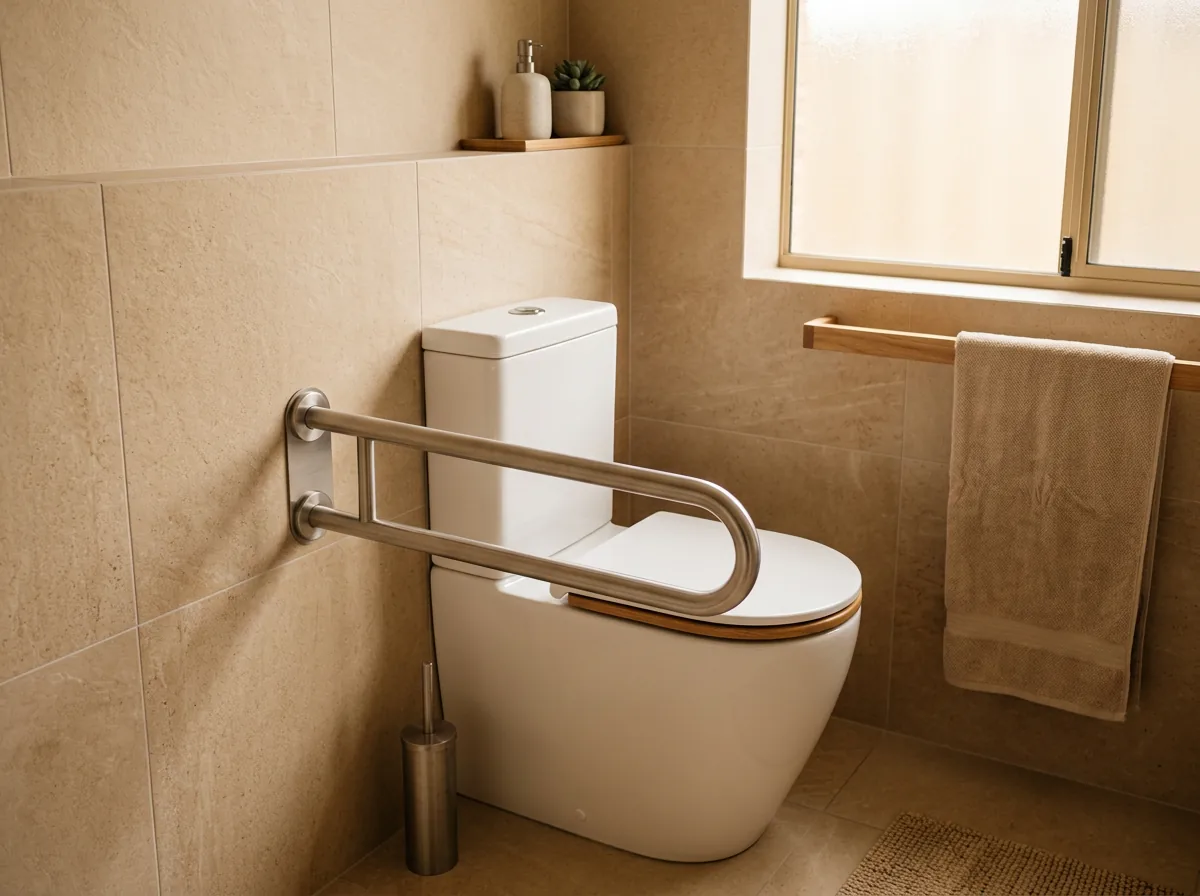
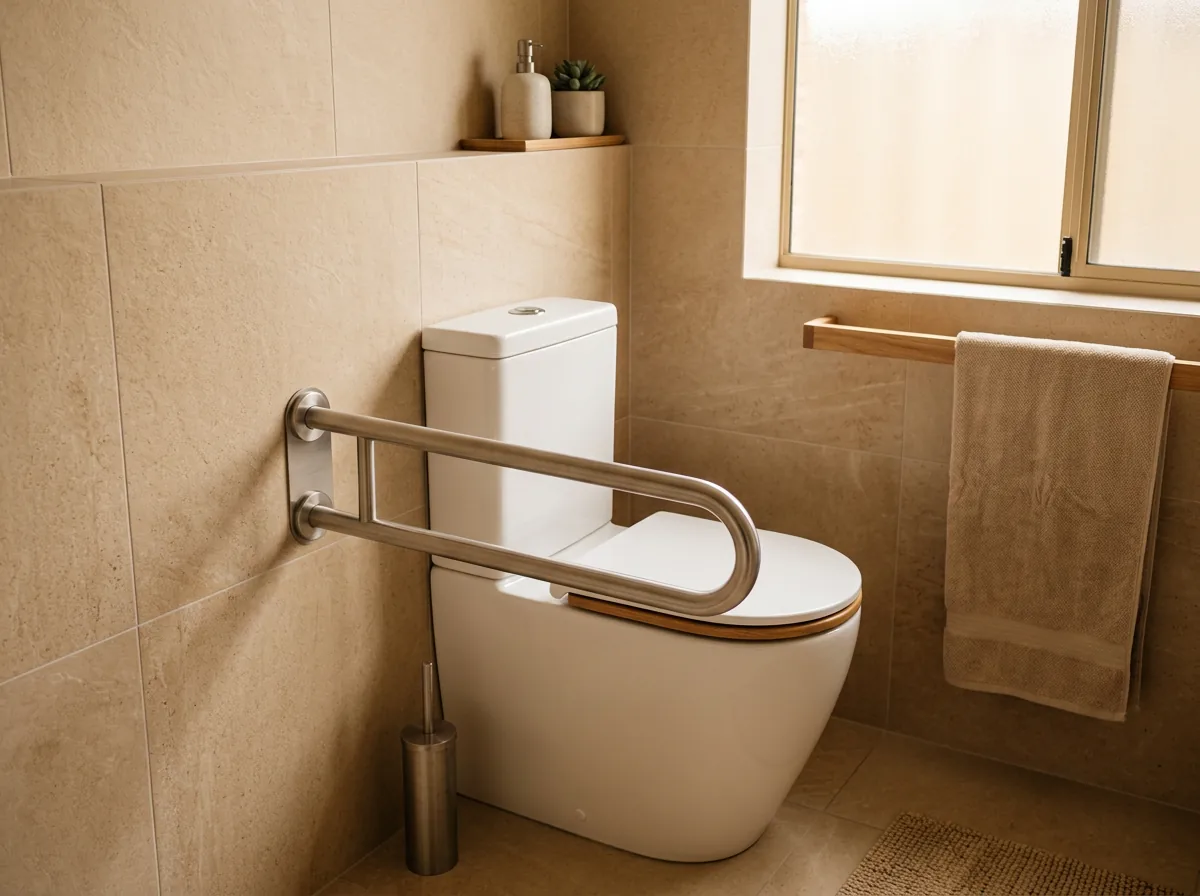
Handrails and grab rails reduce fall risk at the moments when people are most vulnerable - transitions between surfaces, position changes, and wet environments. A properly fixed grab rail installed into solid wall substrate provides a load-bearing support that can catch a person in a stumble; an adhesive or suction-cup rail cannot. The most important locations are the shower, the toilet, the bath, and any step or stair in the home.
Key highlights
Summarise with AI
Ask an AI assistant to summarise this article and tell you how AccessAble can help with your home.
Falls in the home are most common at transition points: moving from sitting to standing, stepping over an edge, changing direction on a wet surface. Those moments share a common feature - a rapid shift in the body's centre of gravity that requires balance adjustment faster than many people can manage safely.
The bathroom accounts for a large proportion of domestic falls, particularly for older Australians. The shower entry and exit, the transition from the toilet, and the step in and out of the bath are all transition moments on a wet, often smooth surface. A rail at each of these points provides a steadying point that allows the person to slow the movement and control their weight shift.
Stairs and steps are the other high-risk location. A step at the front door, a short flight to the back verandah, or an internal stair between split levels all require a deliberate lift of the leg and a shift of weight. A handrail gives something to hold during that movement - reducing the consequences of a misstep from a fall to a catch.
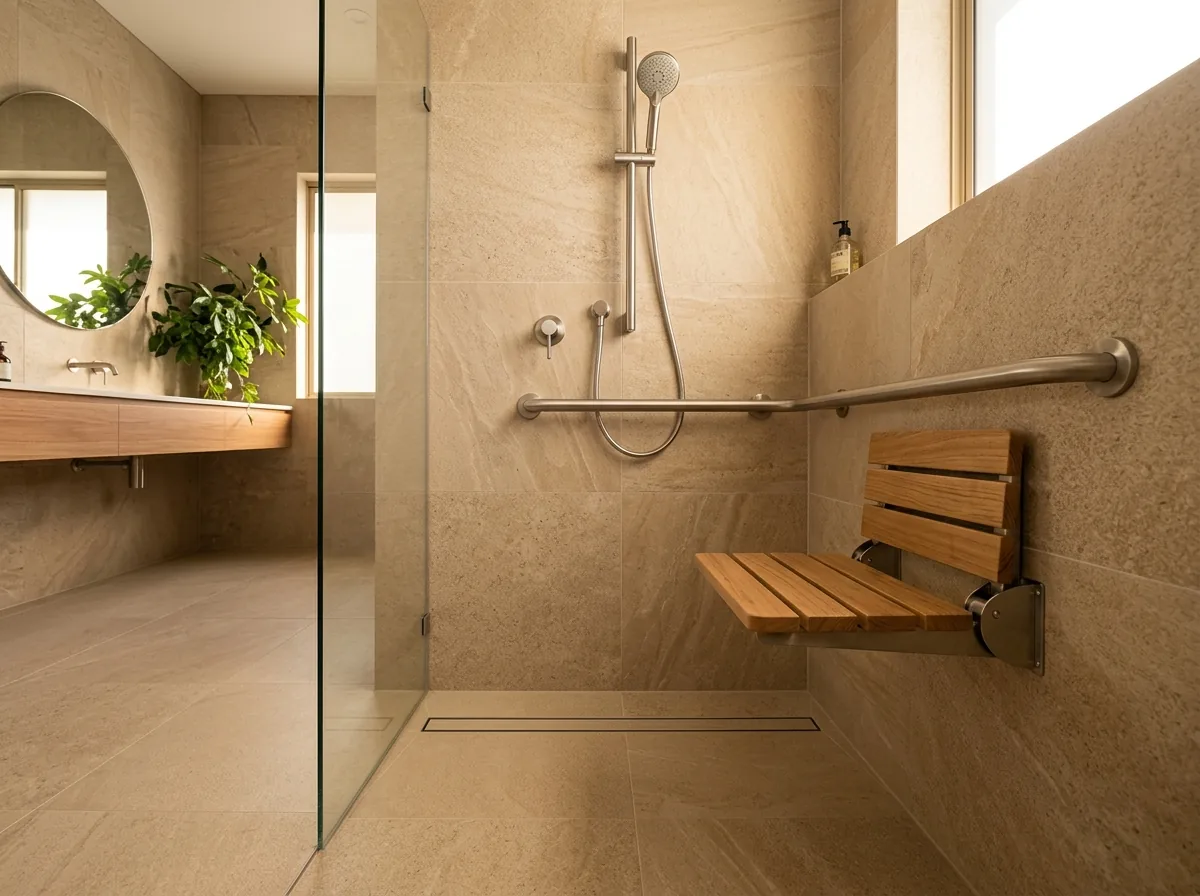
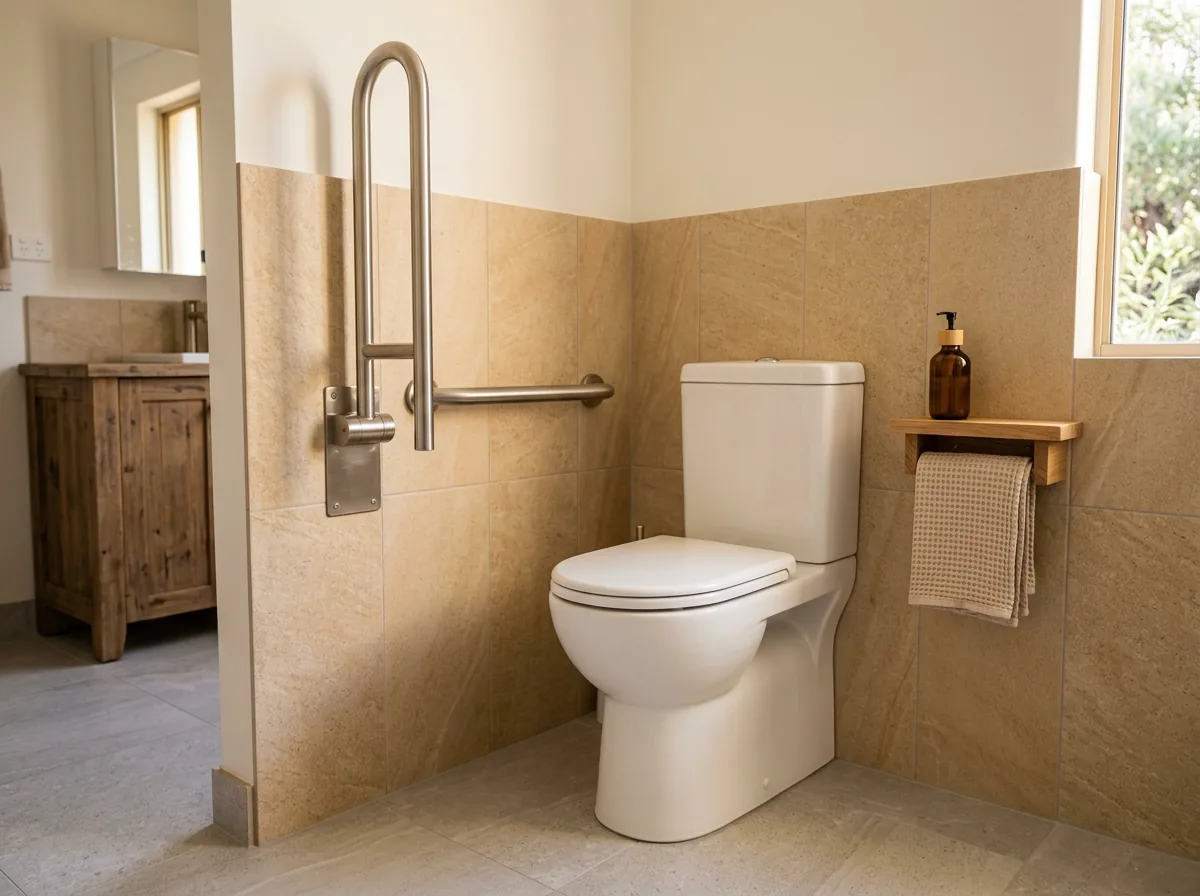
In the bathroom: a horizontal rail at 840 - 900 mm on the shower entry wall for entry and exit; a vertical or angled rail on the shower side wall for steadying while washing; a vertical rail beside the toilet on the side the person leads with; and a rail at the bath rim height if a bath is being used for transfers.
At stairs and steps: a continuous handrail on at least one side of any stair with two or more risers, running from the bottom to the top and extending 300 mm beyond each end. For external front entry steps, a rail that continues past the top step onto the landing so the person has something to hold while they reach for the door handle.
In the bedroom and hallway: a rail or steady point where someone gets up from the bed, or where a narrow hallway is navigated in the dark, can prevent falls that happen outside the high-profile bathroom and stair locations. These are often overlooked but account for a meaningful share of domestic falls.
Hardware stores and online retailers sell grab rails with suction cups or adhesive pads that stick to a tiled wall. They look like a grab rail and cost $30 - $80. They are not safe for weight-bearing use.
A suction-cup rail holds by creating low air pressure between the cup and the surface. The hold is adequate for pulling a towel, but when a person puts their full weight on the rail suddenly - the exact moment a rail is needed most - the suction breaks. Several Australian safety reports have documented falls caused by suction-cup rails failing under load. Adhesive pad rails fail by the same mechanism and also risk pulling tiles off the wall when they are removed.
A properly installed grab rail is fixed with stainless steel bolts through the wall tile and into either wall studs, masonry, or purpose-installed backing boards. The fixing is designed to carry a sudden lateral load of 1,100 Newtons - the equivalent of a person of around 110 kg throwing their weight against the rail. That load cannot be achieved by any suction or adhesive system.
A single grab rail installed by a qualified trades person costs $180 - $450 in Perth, depending on the rail's length, material and the wall substrate it is going into. Stainless steel rails into a masonry wall cost more than nylon-coated rails into timber stud framing, but the principle is the same: a fixed, load-bearing support that will be there when it is needed.
The cost of not having a rail - or of having one that fails - is far higher. A hip fracture sustained in a fall costs $30,000 - $60,000 in hospital, rehabilitation and ongoing care, on average, according to Australian Institute of Health and Welfare data. The disruption to independence, the recovery time, and the risk of further falls during recovery are additional costs that are harder to quantify.
A set of four or five grab rails - shower, toilet, bath and front steps - typically costs $800 - $1,800 fully installed. That is a fraction of the cost of a single fall-related hospitalisation and far less disruptive to arrange.
Grab rails are often described as something for older people or people with disability. In practice, the people who use them most are the same people who would use a towel rail or a window frame to steady themselves - everyone in the household at some point.
A horizontal rail in the shower is used by children who are less steady, by adults who have had a long day, by anyone who has hurt their knee at sport. A rail beside the toilet is useful for anyone recovering from surgery, regardless of age. A handrail on the front steps is used by every visitor who arrives at night or in wet weather.
The homes that have well-positioned, properly fixed rails benefit everyone who passes through them. That makes them a more sensible investment than their reputation suggests - not a concession to age or disability, but a feature that makes the home work better for everyone.
Related services
The highest-priority positions are a horizontal rail at 840 - 900 mm on the shower entry wall, a vertical rail on the shower side wall, and a vertical rail beside the toilet on the person's dominant side. These three positions cover the highest-risk transition moments in a bathroom.
No - not for weight-bearing use. Suction-cup and adhesive rails fail under sudden lateral load, which is exactly the condition they need to withstand when a person stumbles. A properly fixed rail bolted through the wall into solid substrate is the only safe option where fall prevention is the goal.
A single grab rail installed by a qualified trades person costs $180 - $450 in Perth, depending on the rail's length, material and fixing substrate. A set of four to five rails covering shower, toilet and steps typically costs $800 - $1,800 fully installed.
Yes. Grab rails are routinely installed into existing tiled walls. The fixing bolts pass through the tile into the wall substrate behind it. Only if the wall substrate is inadequate - thin plasterboard with no studs at the right position - does a backer board need to be installed behind the tiles first.
Anyone who has had a fall, is recovering from surgery or injury, has a balance or strength condition, or is getting older and wants to stay confident in the bathroom and on the stairs. In practice, well-positioned rails benefit everyone in the house - visitors and family members use them too.
Yes. A rail intended for weight-bearing use should be 32 - 50 mm in circular diameter. That range allows a full power grip for most adults. Rails thinner than 32 mm or wider than 50 mm reduce grip strength and are less effective under load.
Filed under Access & mobility
Keep reading
Access & mobility · 7 min read
Bathrooms · 6 min read
Living at home · 10 min read
Next step
Ask us for a quote. We will tell you what we would change first in your home - and what it costs. AccessAble designs and builds in-house, so there is no waiting on a third party.
Monday to Friday, 7:00am - 5:00pm. Based in Melville, working right across Perth.